Frequently asked questions: Our work in Ethiopia

The International Committee of the Red Cross (ICRC) has been present in Ethiopia since the Second Italo-Abyssinian war in 1935, and permanently since the 1977 Ethio-Somali armed conflict. For almost 50 years, it has been providing humanitarian services to the most vulnerable conflict-affected communities in a neutral, impartial, and independent manner, working closely with the Ethiopian Red Cross Society (ERCS) and other partners from the International Red Cross and Red Crescent Movement.
The ICRC’s role is rooted in international humanitarian law (IHL). The great majority of States in the world, including Ethiopia, have adopted the Geneva Conventions – a cornerstone of IHL. In times of armed conflict, the rules of IHL aim to protect civilians, detainees, the wounded and sick, and to limit the effects of war. Respect for IHL by all parties to the conflicts in Ethiopia is essential. Notably, attacks or obstructions against the civilian population, health staff, facilities and vehicles, or humanitarian workers, are prohibited. Humanitarian access must be rapid and unimpeded.
All services provided by the ICRC are free of charge.
Information for people affected by armed conflict
-
The ICRC aims to preserve humanity and to reduce the threats and suffering people face in armed conflict situations. We do so by engaging with those involved in the fighting and the relevant authorities. We also assist communities in hard-hit areas. In 2026, our work in Ethiopia focuses on the conflict-affected regions of Amhara, Oromia and Tigray.
Always applying our fundamental principles of humanity, impartiality, neutrality and independence, and collaborating with the Ethiopian Red Cross Society (ERCS), authorities and other partners to enhance humanitarian responses, our help includes:
- Engaging with local authorities and community leaders to identify and address urgent humanitarian needs and risks faced by communities.
- Supporting health services and medical care, including physical rehabilitation services, to those affected by armed conflict.
- Strengthening people’s resilience by helping them to recover from the damaging impact of conflict and sustain their livelihoods.
- Facilitating access to safe water, particularly in conflict-affected rural areas.
- Promoting and supporting respect for rules of IHL among authorities, academics, armed and security forces, and armed groups.
- Reconnecting families separated by armed conflict.
- Improving living conditions in places of detention.
-
The ICRC offers free assistance to communities in areas most affected by armed conflict in Amhara, Oromia and Tigray, in cooperation with the Ethiopian Red Cross Society (ERCS), authorities and other partners. In emergencies and other specific situations, we may provide support:
- to vulnerable farmers and their families through the distribution of locally produced seeds as well as fertilizers to help them produce their own food;
- to affected communities through the distribution of emergency household items, cash or vouchers, to facilitate access to income-generating activities;
- to rural communities by renovating or building water supply systems including hand pumps, after these systems were damaged or neglected because of conflict;
- to health facilities such as hospitals and primary health care centres in areas affected by conflict through the distribution of surgical materials, medicine and medical supplies, and occasional building and services repair, to help weapon-wounded people and affected communities have access to health services;
- to physical rehabilitation centres in various areas of the country that are helping people with disabilities, including weapon wounded, through the provision of artificial devices to replace a missing body part, or mobility aids such as crutches and wheelchairs.
If conflict-related humanitarian needs arise elsewhere in Ethiopia, we may support the ERCS’s emergency response.
The ICRC’s assistance depends on available resources and requires prioritization.
For further information or clarification, please contact the ICRC delegation in Ethiopia at the toll-free number 9167. Operators at this community contact center speak Amharic, Oromifa, Somali, Tigrinya.
-
If you are living in Ethiopia, searching for a family member inside or outside Ethiopia, and lost contact due to armed conflict or another situation of violence, in cooperation with the Ethiopian Red Cross Society (ERCS) we can help you in your efforts to reconnect with your loved one. Depending on your case, we may support family reunification, provide free phone calls, or search for the missing person.
Any tracing request is processed after the enquirer has completed the required forms, signed them, and given his/her consent. All requests are kept confidential between the enquirer and the ICRC, and they will only be shared with others after obtaining prior consent from the enquirer (for example, sharing with a National Society of the Red Cross or Red Crescent).
If you live in another country, you are advised to contact the ICRC Delegation or National Society of the Red Cross or Red Crescent there. You may also contact the International Federation of Red Cross and Red Crescent Societies.
For more information, please visit our Family Links website.
-
The ICRC is guided by the humanitarian principles of neutrality, impartiality, and independence in all its operations in Ethiopia. The organization works in areas affected by armed conflict, prioritizing its response based on humanitarian needs, the vulnerability of affected populations, and the presence or absence of other humanitarian actors. Consequently, the ICRC helps vulnerable communities across different regions of Ethiopia where these criteria are met, including Tigray, rather than prioritizing any specific region. Given its specific mandate, the ICRC is currently giving priority to its humanitarian response in three conflict-affected regions of Ethiopia: Oromia, Amhara and Tigray.
More than three years after the end of the active hostilities in northern Ethiopia, many humanitarian needs remain in Tigray. This is why, given its conflict-related mandate and despite budget reductions, the ICRC maintains an active office in Mekelle, with almost 70 staff, covering some of the communities’ most acute needs.
In 2026, the ICRC’s presence and operations are equally significant in Amhara and in Oromia. Numerous areas of both regions are affected by active armed conflict, often requiring an emergency response to help affected communities. We operate from an office in Bahir Dar, Amhara (with 70 staff), offices in Nekemte and Hawassa, covering Oromia (74 staff).
We are closely monitoring the evolution of the situation in the different parts of Ethiopia, as new conflict-related humanitarian needs may arise. The ICRC remains committed to maintaining a balanced response across the entire country, always guided by the humanitarian imperative.
See below our response to humanitarian needs outside Amhara, Oromia and Tigray.
-
Globally, the ICRC is restructuring due to financial constraints, including a 17% reduction in its budget between 2025 and 2026, requiring leaner and more focused structures worldwide.
The ICRC’s Ethiopia Delegation has been affected by these cuts and must work with a substantially reduced budget as compared with previous years. This means we must define clear priorities, fitting with our core humanitarian mandate to address consequences of armed conflict. On the one hand, we prioritize core protection activities and emergency response, and on the other hand we prioritize areas affected by active armed conflict, particularly in Amhara and Oromia currently. Based on evolving needs and risks for the communities, we regularly review the priority zones where we operate.
Despite a smaller footprint and no permanent presence of its own in certain regions, the ICRC stands ready to respond to emergency, conflict-related humanitarian needs wherever they arise, in support of the Ethiopian Red Cross Society (ERCS) and in full transparency with the relevant authorities. The ICRC also works closely with the ERCS to strengthen its emergency response capacity in many locations, while also supporting its long-term organizational development at both headquarters and branch levels.
The ICRC keeps an office in Jigjiga, with three local staff. With support from Addis Abeba colleagues, and in coordination with the ERCS, the team continues to carry out core activities in the Somali Regional State. This includes visiting detainees, reestablishing family links and organizing sessions with communities, authorities, police, militia and armed forces.
Furthermore, the ICRC continues to follow developments about the humanitarian situation around Ethiopia, including in the regions of Afar, Gambella and Benishangul-Gumuz, from its main delegation in Addis and its offices, coordinating any urgent humanitarian response with the ERCS.
Other useful information and clarification
-
The ICRC has received the mandate by States through the Geneva Conventions to assist and protect victims of armed conflicts and promote respect for International Humanitarian Law (IHL). The ICRC focuses solely on alleviating human suffering, regardless of the causes or parties involved.
IHL was specifically developed to address the humanitarian consequences of armed conflicts. It does not determine whether going to war is legitimate or provide solutions for restoring peace. These matters are part of the role of other organizations, such as the United Nations and regional bodies.
However, respect for IHL during conflicts can contribute to the return to lasting peace. Certain obligations under IHL extend beyond the end of armed conflict and are essential for reconciliation and rebuilding.
The ICRC encourages States to explore and strengthen the links between respect for IHL and peacebuilding. As part of a Global IHL Initiative to galvanize commitment of states to respect and comply with their IHL obligations, Ethiopia is co-chairing a workstream precisely looking into this. The ICRC is committed to supporting and promoting its findings.
Furthermore, the ICRC can act as a neutral intermediary between many different types of actors. With the agreement of all sides, it can facilitate humanitarian operations such as the release or exchange of detainees, the evacuation of civilians or wounded people from locations where active fighting is taking place, or even humanitarian dialogue among parties involved in conflicts.
By focusing on its humanitarian mandate, the ICRC ensures that it can assist those most in need during conflicts while maintaining the trust of all parties involved.
Geneva Conventions and the law
Global Initiative to Galvanize Political Commitment to International Humanitarian Law
-
International Humanitarian Law (IHL), also known as the rules of war, applies to all parties in all armed conflicts, regardless of geography or political context. The ICRC works, consistently and confidentially, to strengthen respect for IHL across all conflicts globally to save lives and alleviate suffering. Today, there are more than 130 conflicts recorded by the ICRC, many of which have stretched on for decades with ever more devastating human, social, environmental and economic costs, often with no peaceful resolution in sight.
Some conflicts, such as those in the Middle East, receive a lot of international attention due to geopolitical factors. The ICRC has expressed its concern publicly about the humanitarian consequences of those and of other conflicts, repeatedly calling for respect for the civilian population and IHL.
However, the ICRC is not a public advocacy organization. While other organizations use public pressure, we speak directly with parties to conflict – both state and non-state – on their obligations to respect the rules of war. In some circumstances, we also engage confidentially with states that have an influence over them as another way to encourage greater protection for people affected by conflict.
This ICRC’s insistence on the need to respect IHL, everywhere and always, is not indicative of double standards but rather a reflection of its universal mandate.
While the ICRC works tirelessly to promote compliance, the responsibility for upholding IHL ultimately lies with states, armed groups, and the international community.
-
Since 1935, the ICRC and the Ethiopian Red Cross Society (ERCS) work in close partnership as part of the International Red Cross and Red Crescent Movement, the largest humanitarian network in the world. They also cooperate with other components of the Movement present in Ethiopia to optimize the reach and effectiveness of their humanitarian action.
The ICRC has a specific mandate under the Geneva Conventions to protect and assist victims of armed conflict. As any National Red Cross and Red Crescent Society, ERCS serves as an auxiliary to public authorities in the humanitarian field and possesses extensive local knowledge, volunteers, community networks and branches. By combining their complementary strengths, the ICRC and ERCS can reach people in need and deliver humanitarian assistance more effectively and safely in Ethiopia.
The cooperation between the ICRC and ERCS is guided by the respective roles and priorities of both organizations. It covers emergency preparedness & response, restoring family links, health and ambulance services, capacity building, the promotion of International Humanitarian Law (IHL), and joint operations in conflict-affected areas.
During emergencies, particularly those arising from armed conflict, the ICRC responds urgently and provides technical, financial, and logistical support to the ERCS. It also strengthens the National Society’s operational capacity, organizational development, and security management, enabling it to respond more effectively to humanitarian needs.
In the Amhara, Oromia and Tigray regions, and other areas affected by conflict or violence, the ICRC and ERCS coordinate humanitarian operations to assist communities, support health facilities, improve access to safe water, and protect vulnerable people.
-
The ICRC doesn’t provide health or ambulance services of its own in Ethiopia. While it does not operate an ambulance service, it supports and strengthens the ambulance services of the Ethiopian Red Cross Society (ERCS), particularly in conflict-affected and hard-to-reach areas. The ERCS operates ambulance services across the country.
The ICRC’s support to ERCS includes providing ambulances and other vehicles, facilitating their importation, financial and technical assistance for operational activities, training of volunteers, first-aid personnel and ambulance drivers, the supply of medical equipment and first-aid materials as well as supporting efforts to strengthen the quality, standards, and accountable use of ambulance services.
In 2025, with the ICRC’s contribution to 27 ERCS branches, approximately 178,000 people in Ethiopia benefited from ambulance services. The ICRC has also donated ambulances to ERCS branches and supported ambulance operations with a focus on Amhara, Oromia, and Tigray.
In certain emergencies, ICRC personnel may assist in coordinating or facilitating medical evacuations. For instance, during the armed hostilities in Tigray and other parts of northern Ethiopia (2020–2022), ERCS ambulances carried out medical evacuations with the support and coordination of the ICRC. In specific circumstances, after notifying all those concerned, the ICRC may also evacuate wounded or sick people in its own vehicles.
-
The ICRC’s “protection” role is a key part of its humanitarian mission, in Ethiopia and in any other country where it works. While it aims for safeguarding people in various ways, it shouldn’t be understood as “physical protection”.
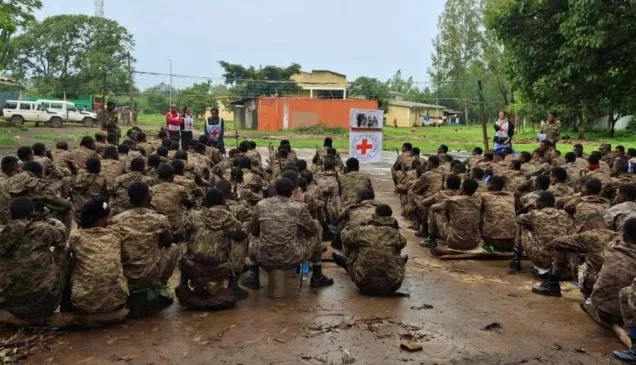
Grounded in International Humanitarian Law (IHL), this role involves monitoring and documenting respect for the lives, dignity and rights of individuals affected by armed conflict and sustaining confidential dialogue with relevant state and non-state actors. In this dialogue, we listen to them, explain our role, raise documented concerns, urge them to fulfill their obligations under IHL and to take corrective measures when violations occur. Specific categories of people are protected under IHL, particularly the civilians, wounded and sick, those no longer fighting, as well as health and humanitarian workers.
As part of its IHL-related “protection” role, the ICRC also monitors the parties’ conduct of armed hostilities, which should balance military necessity with the humanitarian objective of reducing human suffering, particularly among civilians. Key principles of IHL must be respected in this regard, such as distinction (ensuring that military action doesn’t affect civilians which don’t take direct part in hostilities) and proportionality (avoiding excessive civilian harm in relation to the anticipated military advantage).
As part of this role, the ICRC also:
- visits detainees in prisons and other places of detention to ensure their humane treatment and adequate living conditions, through bilateral and confidential dialogue with those in charge;
- helps restore and maintain contact between family members separated by conflict, in collaboration with the Ethiopian Red Cross Society (ERCS) and other National Societies of the Red Cross or Red Crescent.
The overall protection work of the ICRC is guided by its principles of neutrality, impartiality and independence, which enable it to access sensitive areas in Ethiopia and engage with all those involved in armed conflict.
-
In any situation of armed conflict or armed violence, the ICRC remains neutral: it doesn’t take sides. In Ethiopia, the ICRC maintains a dialogue with all those involved in conflicts, including non-State armed groups such as “Fano” and “OLA”. These contacts aim at ensuring respect for International Humanitarian Law (IHL) and basic humanitarian principles, in a similar way to those with armed and security forces. This dialogue is strictly humanitarian and confidential. It doesn’t imply any political recognition or endorsement.
Engaging with all arms carriers and authorities is also crucial for our acceptance and access to communities in need in Amhara, Oromia and elsewhere in Ethiopia. For instance, if we are not perceived as neutral and impartial, safe access to these people could be jeopardized. These contacts are operationally necessary to secure safe passage for our vehicles, guarantee the safety of our staff, and ensure we can cross fluid frontlines to provide humanitarian aid to the affected population.
Material assistance is provided directly to conflict-affected communities, in cooperation with the Ethiopian Red Cross Society (ERCS) and relevant authorities. Medical assistance is donated to recognized health facilities only, to treat any wounded or sick person based purely on medical ethics, regardless of affiliation. Follow-up mechanisms are in place to make sure that the medicine and medical supplies reach the intended people in need.
-
In highly polarized and conflict-prone environments, humanitarian organizations such as the ICRC and ERCS can become subjects to suspicion, especially when their work involves interacting with multiple sides in a conflict. Misinformation or deliberate attempts to discredit neutral actors may also contribute to distrust.
The ICRC and ERCS are committed to their humanitarian mission and adhere to the principles of neutrality, impartiality, and independence. These principles are fundamental to their ability to provide humanitarian aid and gain access to affected populations in conflict zones. While they are not immune to accusations or allegations in complex conflict settings, they never engage in activities such as transporting weapons or contraband.
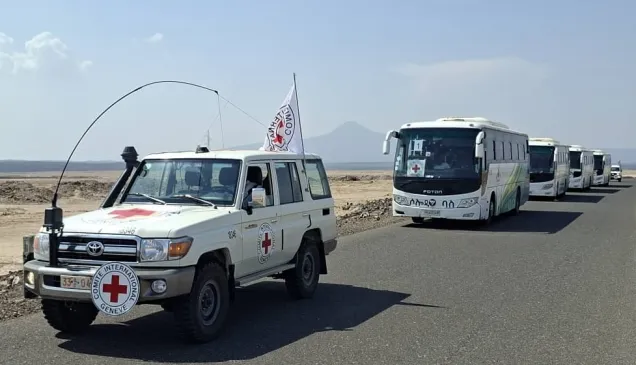
ICRC vehicles are used exclusively for humanitarian purposes – we never transport arms carriers. Likewise, ERCS ambulances are meant to transport only wounded or sick patients, and medical supplies and are marked accordingly.
The Red Cross components have established work ethics and codes. In Ethiopia and anywhere else in the world, all ICRC staff sign a code of conduct. They must strictly comply with their rules of behavior. Any proven misconduct is met with sanctions.
There have been instances where the red cross emblem has been misused by unauthorized non-Red Cross entities in Ethiopia, including by non-ERCS ambulances in conflict areas. Such actions are prohibited under the Geneva Conventions and undermine the neutrality and safety of humanitarian workers. The ICRC, ERCS and other Red Cross Movement partners work to address and prevent such misuse through advocacy and engagement in the field and at federal level. Any misuse of their symbols or resources is prohibited under international and national laws.
-
Suspicions or accusations of intelligence gathering are often based on misunderstandings or misinformation. The ICRC’s mandate is purely humanitarian. It monitors and assesses information to better understand conflict-related dynamics, actors and needs, but never engages in espionage or political activities.
The ICRC operates with strict confidentiality to maintain trust with all parties in a conflict. It does not share sensitive information with governments, armed groups, or other entities. This confidentiality is critical to its ability to access and help vulnerable populations in complex conflict situations.
Take care before you share
If you come across content on social media that you believe to be false or misleading, you can report it directly to the relevant platform.
You can also help slow the spread of misinformation by checking the veracity of questionable information before sharing it with others.
We strive to treat you with respect and dignity
All services provided by the ICRC are free.
Everyone who works with the ICRC (our staff, partners, and suppliers) must always treat you with respect and dignity.
It is forbidden for ICRC employees and our partners to ask for money or any type of favours in exchange for aid. We encourage all to report in good faith suspicion of fraud, corruption, sexual exploitation and abuse, sexual harassment and other suspected misconduct.
You have the right to report cases of inappropriate behaviour or illegal actions on the part of the ICRC.
To do so, you can email us at: code_of_conduct@icrc.org. You can also report it directly in the Integrity Line (available in English, French and Spanish).